

Compression Socks Too Tight or Uncomfortable? Here's What to Know
Posted On: August 15, 2026 by CarePro Health Services in: Compression Therapy Health Tips
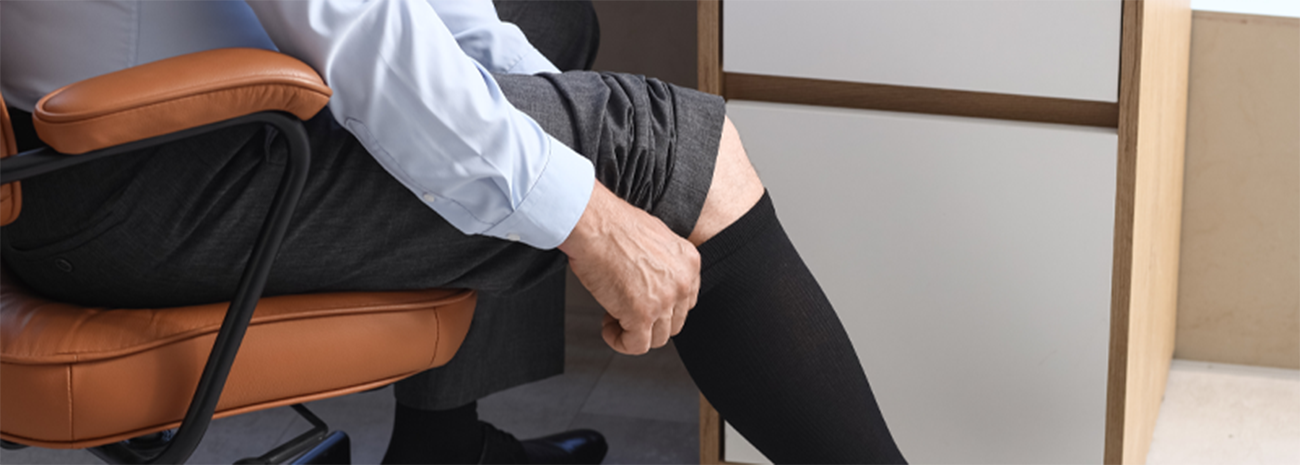
You put on a new pair of compression socks, take a few steps, and immediately think: "Are these supposed to feel this tight?"
It's a fair question, and one we hear all the time at CarePro Home Medical and Kelly's Home Medical. Compression socks are supposed to feel different from regular socks, but there's a real difference between "snug and supportive" and "these are cutting off my circulation." Knowing the difference makes all the difference in whether you actually wear them.
Here's what we tell people who come in with fit concerns.
Jump to a Section
Wondering if your compression socks fit correctly? Use these links to jump ahead.
Are Compression Socks Supposed to Feel Tight?
Yes, compression socks are supposed to feel snug, but not painful. A properly fitted pair should feel firm and supportive, with the strongest pressure at the ankle that gradually eases up the calf. If your pair feels sharp, pinching, or painful, that's usually a fit issue and not a sign compression won't work for you.
Normal compression feels like:
- A steady, hugging pressure — not pinching
- Snug at the ankle, softer at the calf
- Slightly harder to slip on than regular socks
- More noticeable during the first few days, less so as you get used to them
Compression is not supposed to feel like:
- Sharp pain or a squeezing "cut-off" sensation
- Numbness, tingling, or color changes in your toes
- Painful indentations that don't fade after taking them off
- So tight you can't tolerate wearing them through the day
Helpful note: If your socks are causing anything from the second list, that's usually a fit issue, not a compression issue. Fit issues are almost always fixable.
What Compression Socks Should Feel Like
Well-fitted compression socks give you a specific kind of feedback throughout the day:
Snug but Supportive
You should feel the sock the whole time you're wearing it, but in a helpful way — like steady pressure across your calves. Not something you're constantly aware of or fighting against.
Firm Without Pain
There's a difference between "these feel firm" and "these hurt." Firm is fine and expected. Sharp pain, throbbing, or a burning sensation isn't.
Consistent Pressure
Compression should feel even across the whole leg, not concentrated in one spot. If one section is digging in while another feels loose, the sock isn't sitting right.
Better as the Day Goes On, Not Worse
A good pair often feels most noticeable when you first put them on and less noticeable as you move around. If they feel fine at 8 a.m. and unbearable by lunch, something's off.
Easier to Walk In, Not Harder
Compression should reduce that heavy, tired feeling — not add to it. If your legs feel more fatigued in compression than without, the level might be too high for your needs.
A note from our team: The first week is usually the hardest. Compression socks feel more noticeable when they're new, and your legs are adjusting to the pressure. Give a well-fitted pair 5 to 7 days before deciding they don't work, but stop wearing them right away if you have numbness, tingling, skin color changes, or actual pain.
Signs Your Compression Socks May Not Fit Properly
Not every uncomfortable pair is your fault. A lot of the time, the sock simply isn't the right size, length, or compression level for you. Here are the signs we look for:
| Sign | What It Usually Means |
|---|---|
| Sharp pain or squeezing | Compression level is too high, or size is too small |
| Deep indentations that don't fade | Compression is too strong, or the sock is bunching |
| Numbness or tingling in your toes | Cut-off circulation — take them off and try a different size or level |
| Rolling down at the top | Too big at the top band, wrong length, or wrong style for your leg shape |
| Bunching behind the knee or ankle | Wrong length, or the sock isn't being pulled up smoothly |
| Slipping or twisting | Too loose overall, or the wrong length. Knee-high socks should end just below the crease of your knee. |
| Skin color changes, such as pale, blue, or red skin | Take them off immediately and check with our team or your doctor |
| You dread putting them on | Almost always a fit issue — the right pair shouldn't feel like a battle |
Fit check: If two or more of these sound familiar, the sock is telling you something. Come in and let us take a look. We'd rather fix the fit than see the socks live in a drawer.
Get Remeasured for Compression Garments
What About Compression Socks Leaving Marks?
This is one of the most common questions we get, so it deserves its own section.
Light indentations that fade within 10 to 15 minutes of taking them off are completely normal. That's just the elastic pressure leaving a temporary imprint — the same way regular socks leave a mark after a long day.
Marks to pay closer attention to:
- Deep, red pressure lines that don't fade for hours
- Painful indentations that hurt to the touch
- Any mark that leaves broken or irritated skin
- Ring-like impressions at the top band that persist overnight
If you're seeing any of those, it may mean the compression level is too high for you, the size is off, or the sock is bunching at the top band. Bring the pair in and let us take a look. We'll work with you to evaluate the fit and help determine whether a different size, style, or top-band option may be a better match.
Common Reasons Compression Socks Feel Uncomfortable
Most fit issues come down to one of five things. All five are fixable.
1. Wrong Size
This is the number one culprit. Compression sock sizing is based on your specific leg measurements — not shoe size, not weight, not "small/medium/large" guesses. A pair that's a full size off will feel wrong all day, even if the compression level is right.
Fix: Come in for a professional re-measurement — it usually takes 10 minutes.
2. Wrong Compression Level
15–20 mmHg is very different from 30–40 mmHg. If someone recommended you try compression, they usually meant a specific range. Wearing a higher level than you need can feel painful; wearing a lower level than prescribed can feel like they're not doing anything.
Fix: Bring any doctor's notes with you, and we'll match you to the right compression class.
3. Worn-Out Garments
Compression socks lose their elasticity over time. Most quality pairs last around 3 to 6 months with daily wear before the compression starts to weaken. If you've had the same pair for a year and they suddenly "aren't working," they probably aren't — the fabric has just aged out.
Fix: Replace pairs every 3 to 6 months with daily wear, sooner if they feel loose or saggy.
4. Improper Application
Putting them on wrong is more common than you'd think. Compression socks need to be pulled up smoothly and fully, with the heel seated in the heel cup and no fabric bunched at the ankle or behind the knee. Twisted or half-pulled-up socks create pressure in the wrong spots and can feel very uncomfortable, even if the size is right.
Fix: Ask us to walk you through the technique, and consider a donning aid if grip or reach is a challenge.
5. Poor-Quality or the Wrong Style
Not all compression socks are built the same. A pair from a bin at a big-box store may have inconsistent compression, lose elasticity after just a few washes, or have the wrong shape for your leg. And even a great brand won't feel good if the style, such as knee-high vs. thigh-high or open toe vs. closed, isn't right for your body and lifestyle.
Fix: Choose a professional-grade brand and a style matched to how and when you'll wear them.
Quick tip from us: If you've had the same pair for over 6 months of daily wear, it's probably time to replace them, even if they still look fine. Elasticity wears out before the fabric does.
Why Professional Fitting Can Make a Difference
If you've tried a couple pairs and can't find one that works, the issue is almost always in the measurement, not in your legs. Compression socks are one of the most personal fits in home medical equipment, and even a small difference in calf circumference or leg length changes what size and style will work for you.
Here's what a professional fitting at CarePro or Kelly's actually involves:
| What We Do | Why It Matters |
|---|---|
| Measure your legs in the right spots | For knee-highs, that's the circumference of your ankle, the widest part of your calf, and the length from just below your knee to your heel. Shoe size and off-the-shelf sizing aren't accurate enough. |
| Match the compression level to your situation | 15–20, 20–30, or 30–40 mmHg? The right answer depends on why you're wearing them and any doctor's recommendations you bring in. |
| Recommend the right style and fabric | Knee-high or thigh-high? Open toe or closed? Cotton, nylon/spandex blend, microfiber, or a breathable option? These affect whether you'll actually wear them all day. |
| Show you how to put them on | Compression socks take a little practice. We'll walk you through the technique and show you donning aids, like a slip-on butler or silk donning glove, that make it much easier. |
Most fittings take about 20 to 30 minutes. There's no obligation to buy the same day, and re-fittings are always welcome if your legs change after surgery, pregnancy, weight changes, or over time. We'd rather get the fit right than have you stop wearing them.
Contact Us for a Fitting Today
Related Reading
Find Compression Therapy Support at CarePro Home Medical and Kelly's Home Medical
Compression only works if you actually wear it — and you'll only wear it if it feels right. That's why we spend time measuring, fitting, and following up. If something isn't working with the pair you have now, we'd rather help you troubleshoot than have you write off compression entirely.
CarePro Home Medical has locations in Cedar Rapids and Coralville, and Kelly's Home Medical is in Davenport. Whether you're brand-new to compression, recently prescribed a pair, or just want a better experience with the ones you already own, our team is here to help.
Request a Fitting Explore Compression Products Find a Location
Frequently Asked Questions
Are compression socks supposed to feel tight?
Yes, they're supposed to feel snug and supportive — noticeably firmer than regular socks, especially at the ankle. But they shouldn't feel painful, cause numbness or tingling, or leave deep marks that don't fade. Snug and helpful is normal. Sharp pain or a "cutting off" sensation isn't.
Should compression socks leave marks?
Light indentations that fade within 10 to 15 minutes of taking them off are normal and expected. Deep marks that don't fade for hours, red pressure lines, or marks that hurt to the touch are signs the fit or compression level isn't right. Bring the socks in for us to look at. Our team can evaluate the fit and help determine whether a different size, compression level, or style may be a better option.
How do I know if my compression socks are too small?
Common signs of socks that are too small include sharp squeezing at the ankle, painful digging at the top band, numbness or tingling in the toes, a hard time pulling them up, and skin color changes. If it feels like a fight to wear them for even an hour, the size is likely off. A re-measurement usually solves it.
How long should I wear compression socks?
Most people wear them from morning until evening for the best results, then take them off before bed unless a doctor has told them otherwise. Put them on first thing in the morning, before swelling has a chance to set in — that's when they're easiest to get on and most effective throughout the day.
Can I return compression socks that don't fit?
Compression socks generally can't be returned once they've been worn, for hygiene reasons — that's true almost everywhere, not just at our locations. That's exactly why we take the time to measure carefully before you buy. If you've bought a pair somewhere else that isn't working, we're still happy to take a look and help troubleshoot the fit or point you toward a better next pair.
Where can I get professionally fitted for compression stockings?
CarePro Home Medical has trained fitters at our Cedar Rapids and Coralville locations, and Kelly's Home Medical fits compression at our Davenport location. Walk-ins are welcome, or you can call ahead to schedule a fitting. Bring any doctor's recommendations with you if you have them.
0 comments