

Mobility Scooter vs. Rollator Which One Is Right for You
Posted On: May 22, 2026 by CarePro Health Services in: Age In Place Aid to Daily Living Mobility Scooter
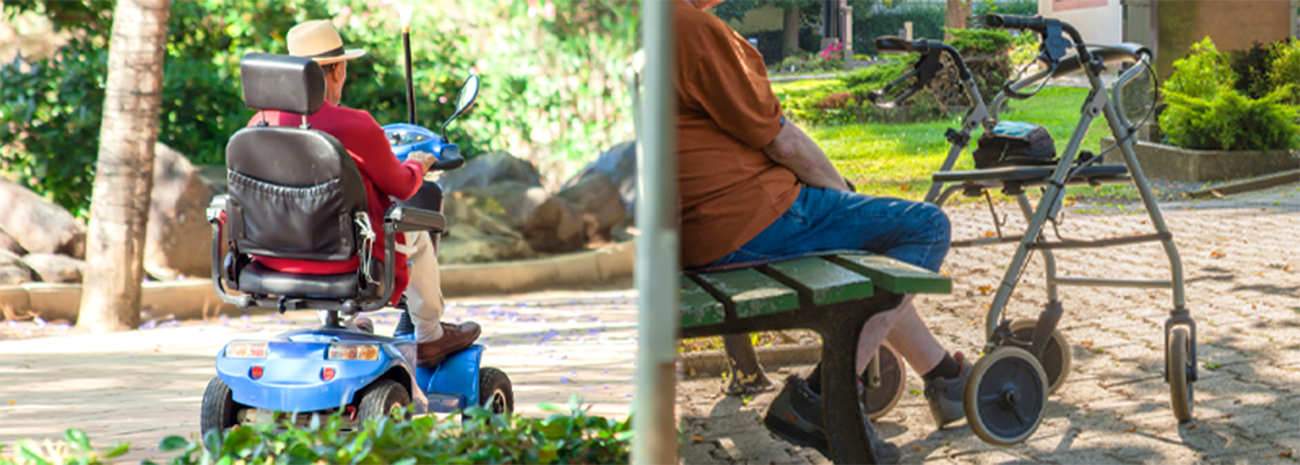
You can get around the house fine, but the grocery store, a grandkid’s game, or a community event leaves you wiped out. Or maybe you’re thinking, “I just want a little more stability… without feeling stuck.”
If you’re weighing a mobility scooter vs rollator, then here’s what you need to know. These are two of the most common mobility aids people consider first, and the “right” choice depends on how you move today and where you want to go tomorrow.
Below is a practical, side-by-side comparison, plus a simple way to decide without overthinking it.
Quick Answer If You’re in a Hurry
Choose a rollator if you mostly walk on your own but want balance support and a place to rest.
Choose a mobility scooter if walking longer distances drains you, hurts, or limits your day, and you want to save energy for the things you enjoy.
If you’re on the fence, think “walking aid” vs “riding aid.” One supports walking, the other replaces most of it for longer trips.
What a Rollator Is Best For
A rollator is a walker with wheels (usually four), hand brakes, and a built-in seat. Many people call it a scooter vs walker with seat comparison, but a rollator still expects you to walk. The seat is there for short breaks, not for travel.
A rollator walker for seniors can be a great fit when you want steady support, a little confidence, and fewer “white knuckle” moments, especially on sidewalks, in stores, or around the house.
A rollator tends to help most when you:
- Need balance support
- Tire out after short spurts but can still walk
- Want a stable way to carry items (basket or pouch)
- Like having a quick place to sit when you need it
This might be you if:
- You feel unsteady when you turn, stop, or start walking
- You “furniture surf” at home or reach for walls in hallways
- You can walk through a store, but you need 1–2 sitting breaks
- You avoid outings because standing in line is hard
- You want something that folds and fits in most trunks without much hassle
- You’re hoping to stay active and keep walking, just with more support
Good to know: Rollators work best when the brakes fit your hands comfortably and the handle height is adjusted correctly. A poor fit can make the rollator feel “tippy” or hard to control.
Explore Rollator Options Online
What a Mobility Scooter Is Best For
A mobility scooter is a powered mobility aid you sit on and drive using simple controls. It’s often the better mobility aid for long distances when walking is possible but exhausting, painful, or unpredictable.
A mobility scooter for seniors can help you keep doing normal life things — shopping, appointments, church, parks, family events — without spending the whole next day recovering. Some people use a scooter outdoors and still walk short distances indoors.
Many scooters are designed with portability in mind. A portable mobility scooter may fold, come apart into lighter pieces, or fit on a vehicle lift, depending on the model. Portability isn’t one-size-fits-all, so it’s worth thinking through your car, trunk height, and who will be lifting what.
This might be you if:
- Walking a full store, festival, or parking lot feels like “too much”
- You skip outings because you’re worried you won’t make it back to the car
- You want the best mobility aid for outdoor use on sidewalks and longer paths
- You need a way to save energy due to fatigue, joint pain, or breathing limitations
- You like the idea of sitting the whole time instead of stopping to rest
- You want more independence at bigger events where seats aren’t easy to find
Good to know: Two scooter details matter more than people expect: mobility scooter turning radius and mobility scooter weight capacity. Turning radius affects how easily you can maneuver in tight spots. Weight capacity affects comfort, performance, and long-term durability.
Explore Mobility Scooter Options Online
Rollator vs Mobility Scooter Side-by-Side Comparison
If you’re deciding between a rollator vs mobility scooter, use this quick comparison to match the tool to your real day-to-day life.
| Feature | Rollator | Mobility Scooter |
|---|---|---|
| Stability | Helps with balance and steadiness while walking | Stable while seated, less fall risk from walking fatigue |
| Distance | Best for short to moderate distances with breaks | Best for longer distances and bigger outings |
| Terrain | Great on smooth indoor floors and sidewalks | Handles longer outdoor paths; terrain depends on model |
| Speed | Your walking speed | Powered speed settings, generally faster than walking |
| Storage and transport | Folds; often fits in most trunks | May need folding, disassembly, or a lift depending on model |
| Learning curve | Low, but brakes and posture matter | Moderate; steering, controls, and safe turning take practice |
| Cost considerations | Often less expensive overall | More expensive; batteries and maintenance are part of ownership |
| Caregiver considerations | Easier to load and store; caregiver may still assist with walking | Caregiver may help with transport, ramps, charging, and setup |
| Home space and doorways | Works in most homes and narrow spaces | Needs enough space to turn; check doorway width and layout |
Don’t forget: Where you’ll use it matters as much as what it is. A rollator that feels perfect in the showroom can feel frustrating on a steep driveway. A scooter that feels great outdoors can feel too wide for a tight hallway. Think through your home layout, common destinations, and how you’ll get it in and out of your vehicle.
How to Decide Using 5 Simple Questions
If you’re stuck, answer these in order. Don’t aim for perfection — aim for “most days.”
- How far do I need to go without stopping?
If your typical outing includes long parking lots, large stores, or long hallways, a scooter often wins. - What ends the outing for me right now — fatigue, pain, or balance?
If balance is the biggest issue, a rollator can offer steadiness. If fatigue or pain is the limiter, a scooter may help you stay out longer. - Do I want support while walking, or do I want to ride?
A rollator supports walking. A scooter replaces most walking for longer trips. - Where will I use it most?
Mostly indoors with tighter spaces can lean rollator. Mostly outdoors or community outings can lean scooter. - How will I transport and store it?
If you’ll load it into a trunk, think about lifting and space. If you have a garage, charger access, or a vehicle lift, scooters become much easier to live with.
One more caregiver-friendly tip: If you’re shopping for a parent, picture the “hardest regular day,” not the best day. The right choice should still work when they’re tired, sore, or having an off day.
Common First-Time Buyer Mistakes to Avoid
These are easy to miss when you’re trying to make a quick decision.
- Choosing based on looks instead of fit. A sleek aid that’s uncomfortable, unstable, or hard to use won’t get used.
- Ignoring turning space at home. This is big for scooters. Pay attention to corners, narrow hallways, and bathroom entry. Mobility scooter turning radius can make or break daily ease.
- Not thinking about the car and trunk. A scooter may be a perfect match, until you realize it’s hard to lift or doesn’t fit. If portability matters, look at a portable mobility scooter design and who will handle loading.
- Buying a seat feature you won’t use correctly. With rollators, people sometimes sit without locking brakes or on uneven ground. Safety habits matter.
- Underestimating terrain. Sidewalk cracks, slopes, gravel, and grass feel different than smooth showroom floors. Think about your driveway, favorite park path, or the route into your church.
- Overlooking weight capacity and comfort. For scooters, mobility scooter weight capacity is about more than a number. The right fit improves stability, ride comfort, and performance.
- Skipping basic “try it” time. A few minutes of practice can reveal a lot. Brake feel, hand comfort, seat height, and steering all matter more than you’d think.
How CarePro and Kelly's Help You Get the Right Fit
If you’re searching for a home medical equipment store near you, it helps to talk with someone who sees these decisions every day.
CarePro Home Medical and Kelly’s Home Medical help people compare options in a practical, low-pressure way, so you can focus on safety and independence, not sales language. You can ask questions, look at different models, and get help thinking through real-life details like storage, transport, and home fit.
For many people, local support matters just as much as the product. If you’re exploring mobility scooters in Cedar Rapids, mobility aids in Coralville, or mobility devices in Davenport, having a nearby team can make setup, learning, and ongoing questions feel much more manageable. CarePro and Kelly’s can also help with delivery and basic setup or training when applicable, and provide guidance on insurance billing steps where appropriate.
If you’re not sure which direction to go, start with your “hardest outing” and your home layout. Those two clues usually point you to the best next step.
Visit a CarePro or Kelly's Mobility Equipment Store Near You
Questions People Ask When Choosing a Scooter or Rollator
Can I use a rollator outside?
Yes, many people use a rollator outside on sidewalks and smooth paths. Look for sturdy wheels and reliable hand brakes, and avoid steep slopes or loose gravel if it feels unstable.
Do scooters work in small spaces?
Some scooters can work indoors, but tight hallways and sharp corners can be challenging. The key is the scooter’s size and mobility scooter turning radius, plus how wide your doorways are.
How do I know if I need a seat?
If standing still in line is harder than walking, a rollator seat can be very helpful for short rests. If you need to sit for most of the outing to make it doable, a scooter is often the better match.
What should caregivers look for?
Focus on safety, comfort, and how the device fits the person’s real routine. Caregivers should also consider transport, storage, and whether the user can manage brakes, controls, and charging independently.
How do I transport a scooter?
Some scooters fold, and others disassemble into lighter pieces. A portable mobility scooter may fit in a trunk more easily, while larger models may need a vehicle lift or extra space.
What should I measure at home before buying?
Measure doorway widths, tight hallway spots, and the space where you’d store the device. For scooters, also think about turning areas like the kitchen, bathroom entry, and around furniture.
Are there weight limits?
Yes. Rollators and scooters both have weight capacity limits, and scooters especially should match the user’s needs for comfort and performance. Checking mobility scooter weight capacity helps you choose a model that feels stable and lasts longer.
0 comments